
Carlsbad Double Track Project
Among intercity and commuter rail corridors in the United States, the Los Angeles–San Diego–San Luis Obispo (LOSSAN) corridor has experienced the most significant growth in ridership and service density since 1990. The corridor carries Amtrak Pacific Surfliner intercity service along with Metrolink and Coaster commuter operations. Over several decades, Caltrans, the LOSSAN Rail Corridor Agency, and local transportation authorities have invested in capacity improvements—primarily double-tracking—to support higher service levels and reliability.
Project Snapshot
- Budget: $17.1 million
- Scope: 1.9 miles of new main track creating a continuous 5.1-mile double-track segment; new control point; 213-foot concrete bridge; two No. 24 turnouts for higher-speed universal crossover operations
- Outcome: Completed ahead of schedule and under budget (February 2012)
- Role: Project Manager – planning coordination, contract administration, budgeting, scheduling, environmental compliance, and interagency agreements
- Significance: First Amtrak-funded corridor capacity improvement in the western United States
In 2010, Amtrak advanced the Carlsbad Double Track Project, the first Amtrak-funded corridor capacity improvement in the western United States. The $17.1 million project constructed 1.9 miles of new main track to create a continuous 5.1-mile double-track segment, installed a new control point, built a 213-foot concrete bridge, and modified an existing control point with two No. 24 turnouts to enable higher-speed universal crossover operations. The project was completed ahead of schedule and under budget in February 2012.
Thomas C. Cornillie served as project manager for Amtrak, with responsibility for planning coordination, contract administration, budgeting, scheduling, environmental compliance, and interagency agreements. The work required close coordination among Amtrak engineering, procurement, and operating staff; host railroad partners; state and local agencies; and environmental regulators. Key challenges included aligning construction activities with available funding milestones, minimizing disruption to existing passenger and freight service, and performing work safely adjacent to an active main line in environmentally sensitive areas.
The project illustrated several principles that remain central to effective capital program delivery:
- Translating regional capacity and service objectives into a clearly scoped, fundable project
- Managing multi-source funding requirements and schedule constraints
- Coordinating multidisciplinary and multi-agency teams without formal line authority over all participants
- Maintaining rigorous project controls while adapting to changing conditions
- Delivering infrastructure improvements that support both immediate operational needs and longer-term corridor performance
Project Photos
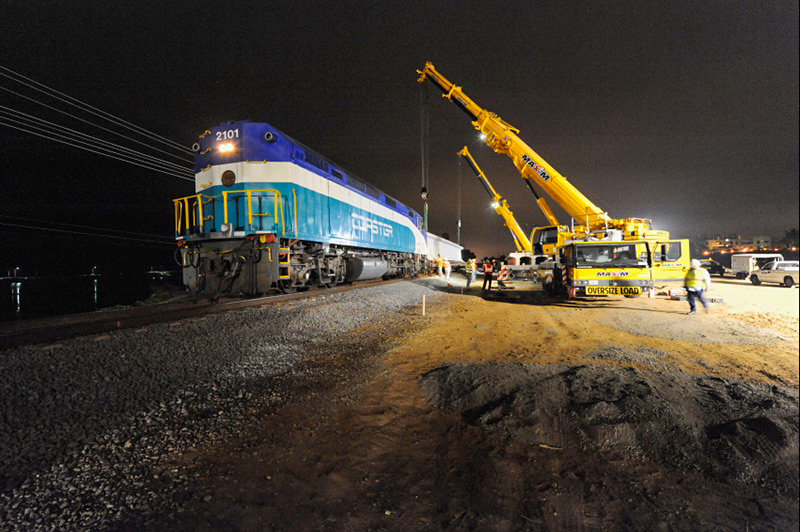
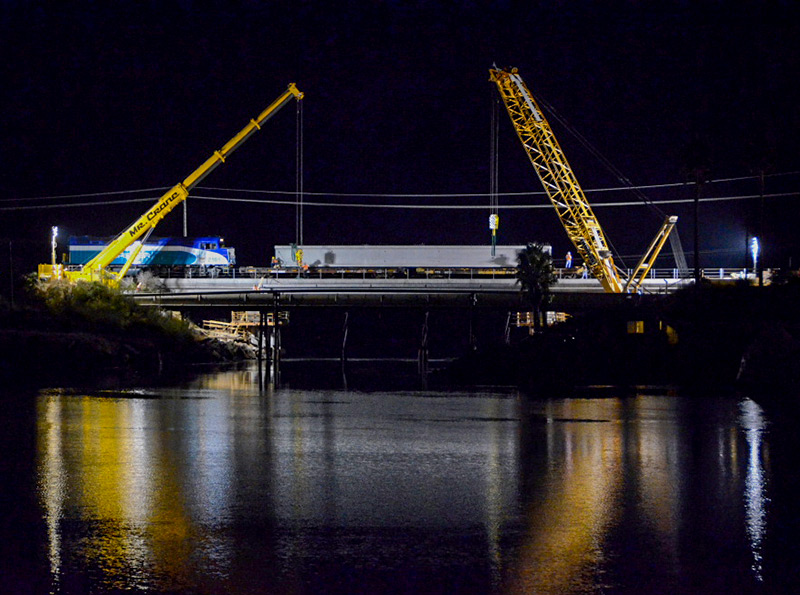
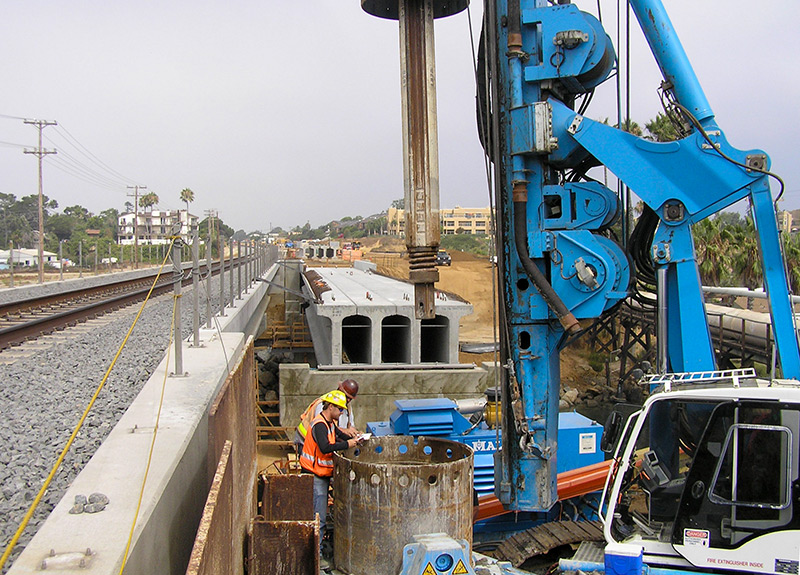
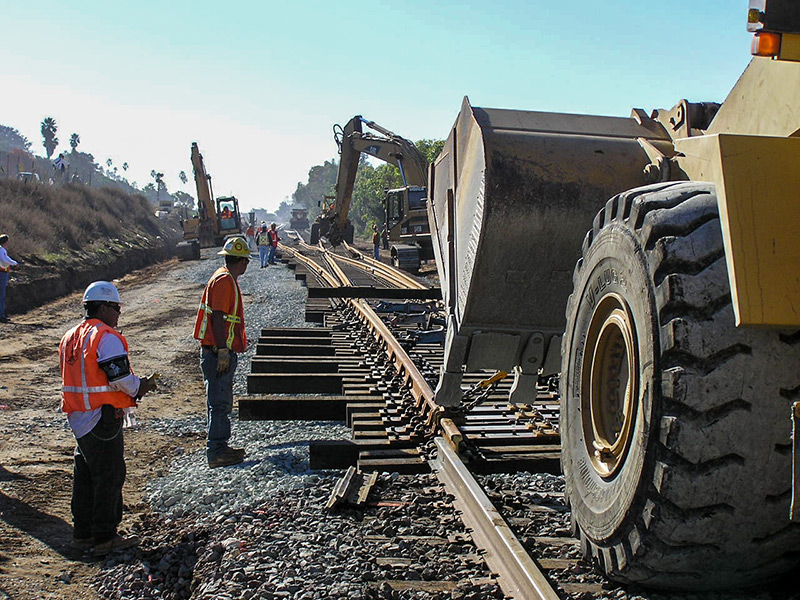
Cornillie has presented on the Carlsbad Double Track Project and related LOSSAN corridor work to share practical approaches for building cohesive planning-and-engineering teams, navigating public-private and interagency partnerships, and managing the critical-path issues that commonly arise on active passenger rail corridors.
Planning, Developing, and Completing the Carlsbad Double Track Project – Presented at the American Railway Engineering and Maintenance of Way Association (AREMA) Annual Conference, September 2012, in Chicago, IL
Successfully Planning and Implementing Railroad Infrastructure Projects That Require Major Service Disruptions – A Case Study Examination (co-authored with John P. Eschenbach) – Presented at the Transportation Research Board Annual Meeting, January 2013, in Washington, DC, and at the American Railway Engineering and Maintenance of Way Association (AREMA) Annual Conference, October 2013, in Indianapolis, IN
The Santa Margarita River Bridge Replacement Project: Overcoming Construction Challenges in Rebuilding Railway Infrastructure – A Case Study Examination (co-authored with Michael J. Albanese) – Presented at American Railway Engineering and Maintenance of Way Association (AREMA) Annual Conference, September 2014, in Chicago, IL
The project remains a useful case study in disciplined capital project delivery under real-world funding, operational, and environmental constraints—experience directly relevant to the complex transit capital programming and funding environments faced by regional agencies and operators today.